
Phobias can be crippling, especially when they inhibit you from undertaking essential tasks - like addressing a public gathering, trying to find your way through a dark room, or coming face to face with a giant bug on your desk. Virtual reality produces a pathway for the brain to remain as composed as it can be when faced with a known or unknown fear. Here's how

Author: Judith K. (Judith K.)

story
Understanding the mind-body connect
Your mind is where you spend most of your time, so make sure it is a nice place to live in. Meditate, engage in new hobbies as often as you can, feed the mind with new information by educating yourself on a topic, or even learn a new skill in your free time

story
Do vision boards really work?
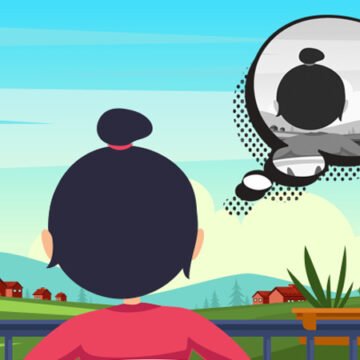
Your dreams are as real as you can imagine them. And creating a vision board of how you’d like something to turn out ensures that the ‘vision’ always remains in your mind subconsciously. The brain fosters this process by directing you to information, which your goals prioritise
story
How anticipatory nostalgia impacts your life
The human mind is a marvel, where anticipatory nostalgia acts as a defence mechanism, enabling you to consciously acknowledge - when the inevitable happens - that the moment is about to end, thus reducing the intensity of grief or sadness once it becomes a memory

story
Can dreams be controlled?
Lucid dreaming enables you to ‘write your own story’ in your dream by directing the plot to what you’d want it to be. This takes place while the body is completely rested and asleep, but the mind is consciously awake. The science and understanding of such dreams is still being studied through extensive dream analyses

story
Avoiding tasks and why we do it
Perfectionism may be a stumbling block especially when dealing with a procrastinated task. So don’t be hard on yourself. Exercise patience and self compassion so that you are kind to yourself when trying to accomplish something you wouldn’t usually want to
story
The brain and the AI spiral
The high prevalence of Artificial Intelligence taking over jobs and workload can never truly match the brilliance of human brain functions. With the use of AI in accomplishing crucial brain-developing tasks, the actual thinking processes take a backseat, thus sending it to a state of lethargy

story
Small connections count
The impact of small interactions is not only subjective, but also neurobiological. Such interactions aren’t just polite, they’re protective. They signal to your body to not always remain in a state of hyper vigilance, but to learn to let loose in a safe and secure manner. It reminds the heart and mind of the prevalence of basic human kindness

story
Invisible loss: Dealing with grief and bereavement
The intensity of the bond existing between an individual and their cause of grief will not always match societal standpoints; because something considered a ‘loss’ in the eyes of someone may be inconsequential to another. Society allows a bouquet of flowers, comforting comments, and an expression of sadness to the bereaved; while it is important to know that grieving doesn’t end there

story
NRI Watch: Where passive aggression meets digital tech
The age of passive aggressive tech pulls modern employees into a loop where cross-checking previous conversations to understand the tone and structure of texts before sending a new message becomes necessary. If a conversation over text requires more than four exchanges, get on a quick phone call. Hearing the human voice provides the clarity no emoticon can give