
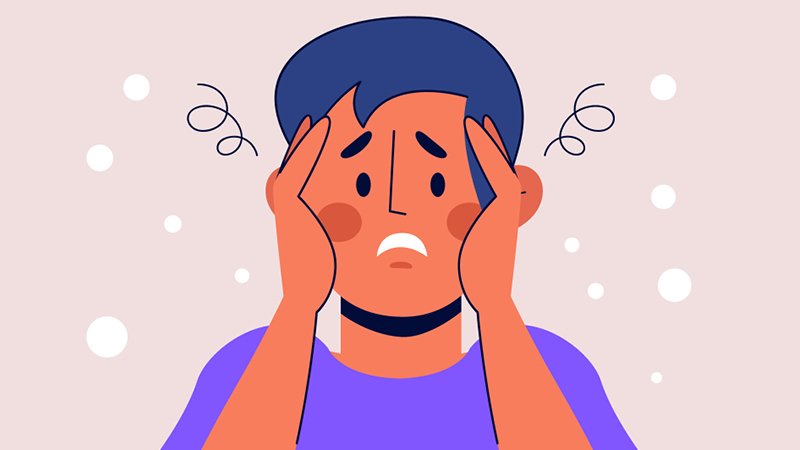


Recognising the first week of November as International Stress Awareness Week draws our attention to how we can identify stressors, the physical state of panic, and what goes behind the process of the body choosing between ‘fight’ and ‘flight’.
Panic is a sudden rush of anxiety or fear that diminishes the ability to rationally think or move. This can be triggered by the stressors you encounter in your day-to-day. An example would be, when you almost slip on the marble floor at work, or almost spill coffee on your white shirt before a meeting. These ‘almost’ moments keep your brain on its edge and constantly scans your environment for possibilities of disaster.
Stressors refer to the elements around, or in you, that causes a state of unrest in the body. Let’s assume you’re working late one night at the office and your brain signals that someone just walked past you. You start to get anxious and immediately turn to look. You don’t see anybody. But your brain doesn’t stop scanning the room for someone your eyes missed to see or if there’s actually an intruder hiding behind a desk. This causes your biological alarm to sound loudly – overpowering your thoughts and rationality.
Before your logical thinking comes to play and tells you that it was just the reflection of a moving vehicle outside, the mind is already panicking, and sending signals to the entire body that you’re in probable danger. This is where you experience palpitations, excessive sweating, and an increase in adrenaline and cortisol – which elevates your anxiety and stress levels. The state of panic will last as long as the brain believes what the eyes convey – without allowing the mind to understand the physical situation properly.
Panic may also stem from deep-rooted phobias. You may be unaware of what causes your body to react with panic to a certain situation until you are actually experiencing it. You go for a swim one late evening after the sun has set. The water is cool and your surroundings are quiet. It’s peaceful and the pool is lit underwater with little warm-toned lights attached to the walls. As you complete your laps with no pressure of time or perfection, you have an intrusive thought: ‘what if I encounter a giant reptile at the deep end?’
As your body gears up for escaping your presumed dangerous situation, the heart starts to pump additional amounts of blood to your muscles. And more blood is sent to the surface of your skin and your stomach. This is what makes you feel dizzy or nauseous. During this frantic state, the body is in need of more oxygen, thus causing you to take quicker and shorter breaths. The mind and the body work together to carry you through an anticipated danger by activating every biological system that contributes to your functioning.
When this state of panic occurs suddenly, with no warning or intrusive thought leading to it, it causes a panic attack. Panic, in general, can be understood as a cloudy sky on a normal day. A panic attack is when a sudden thunderstorm breaks out from the clouds with no forecast. With higher intensity, and greater speed, and no predictability, the mechanism leading to panic is accelerated by the occurrence of an attack.
Unlocking into panic mode is the body’s way of communicating with the mind that it is sufficiently prepared for any upcoming danger. It is a form of self-preservation and protection that is built into our system through biological instincts, life experiences, and the knowledge to perceive future threats.
You don’t have to overthink a panic attack. One can never be prepared for it as well. But, when it does strike, remember that it’s your body’s reminder to sail to safety. – editor@nrifocus.com
– Judith is a counselling psychologist, specialising in mindfulness therapy and researching the quirks of life.
Leave a Reply