





She is reading ‘The Liberation of Sita’ by Volga (writer P. Lalita Kumari’s pen name), an activist known for her feminist Telugu literature, which won the Sahitya Akademi Award in 2015 for ‘Vimukta Kadha Samputi’. The book meant a lot to Ratna Pathak Shah as it questioned patriarchy, and looked at mythology through the lens of women’s liberation.
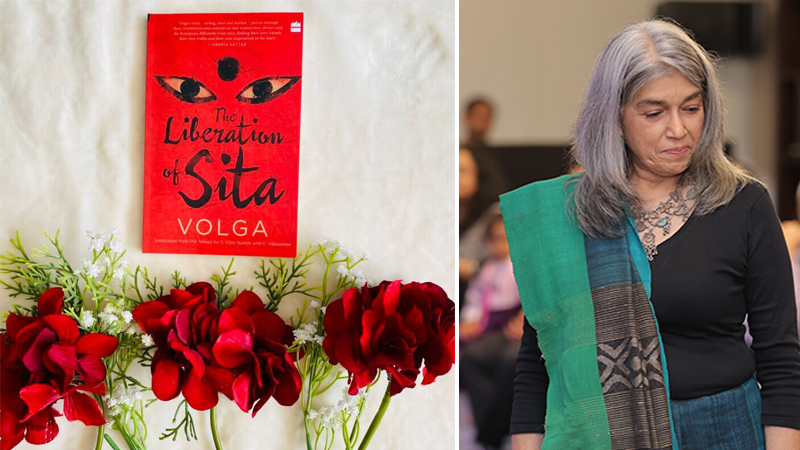
“Valmiki’s ‘Ramayana’ tells the story of Ram’s exile, and how he is the moral compass, but Volga talks about Sita who, after being abandoned by Ram, starts a trek to self-realization. She meets Surpanakha, Renuka, Urmila and Ahalya; it is a gripping book,” says Shah.
“Don’t look at how I am today and imagine that all this happened easily, Sita. I have become tough by facing up to the challenges life throws at me. I have been able to find happiness in trying to understand the very meaning of beauty,” Surpanakha tells her. Ahalya asks her to display her self-authority. These are tales of women who suffered. Sita is urged to not look at what society tells a woman.
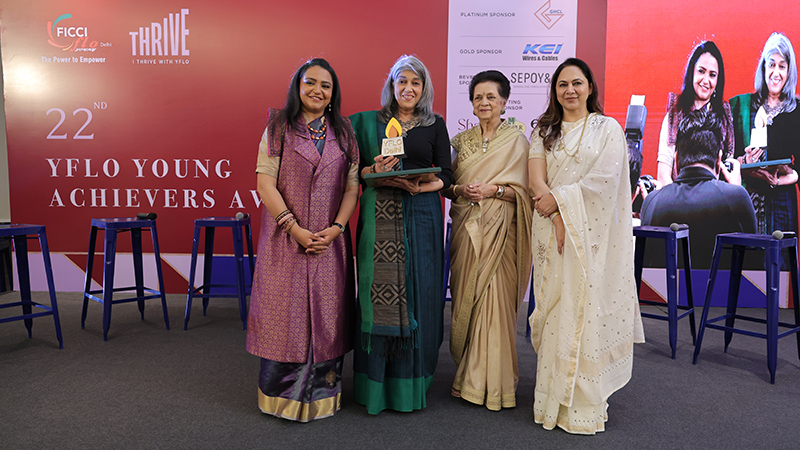
“I’ve been glued to it, along with Arundhati Roy’s ‘Mother Mary Comes to Me’. I read several books at one time,” smiles Shah, who was in Delhi to address the 22nd edition of the Young Achievers Awards hosted by YFLO Delhi.
This innate sense of liberal thought was instilled by her mom, Dina Pathak. “She was an extremely prolific speaker, writer, loved by people; above all, she was fearless. She instilled curiosity in us. I used to watch her performing; it taught me enormously – her way of dealing with things was by being unafraid and free. It is the biggest lesson I learnt,” Shah adds. Books and poetry were a part of growing up, with special love for Ali Sardar Jafri’s poetry.
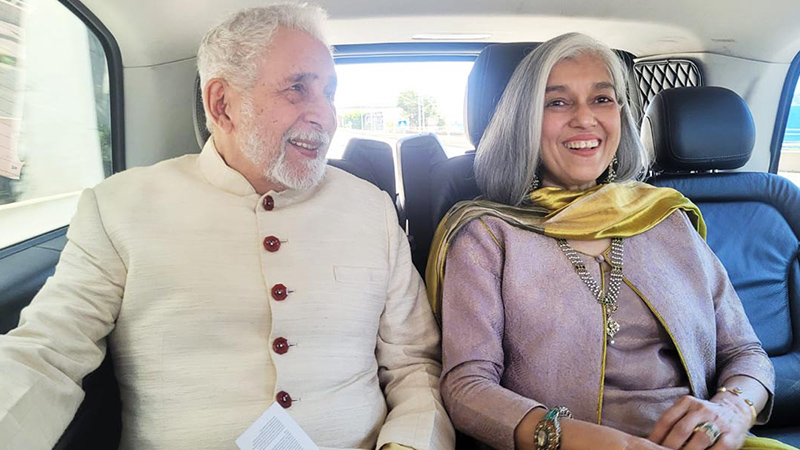
Shah and Naseeruddin Shah have been married since 1982, and she believes they have influenced each other in various ways. Naseer’s memoir ‘And Then One Day’ chronicles his life from Meerut to school in Nainital. And then to Aligarh University, the National School of Drama and the Film and Television Institute of India. But he has written the book with his unforgivable humour, also paying homage to great actors and directors he has worked with, such as Shyam Benegal, Girish Karnad, Om Puri and Shabana Azmi.
“The book was his, I only read it once! We run a theatre company together with Motley Productions. We’ve staged Russian playwright Aleksei Arbuzov’s 1977 work ‘Old World’, among others. It is most satisfying and it keeps us all connected. Our children have also learnt from this; frankly they keep us entertained by never taking our advice,” she adds.
“Gen Z who?” she asks, and vehemently says, youngsters are a big part of our audience, under 30. But there are all kinds of little spaces, where some can seat 50, some 1,000. Smaller venues are cheaper. Theatre is a great way to communicate things that concern them. “So many young people after we do plays come and talk to us about how they loved the gritty portrayals. Chennai, Bengaluru and Mumbai have a dedicated theatre audience. Delhi, I don’t know,” she explains.
Shah is fiery and speaks her mind. She said how a huge entourage that actors go along with today doesn’t help their work in any way, and how young actresses try to be cute entertainers on sets. “If you ask me which role I would like to have done, it would be Kiran Rao’s ‘Laapataa Ladies’, also an Oscar nominee, but tough to choose one. Or ‘Boong’, Lakshmipriya Devi’s Manipuri film that won a BAFTA Film Award 2026 for best Children’s and Family Film,” she says.
“I loved the story about a small village of Manipur, Boong, where a boy – played by Gugun Kipgen – wants to surprise his mother by looking for his absentee dad. His quest turns the quiet world upside down. This is the best I’ve seen in a long time,” Shah explains.
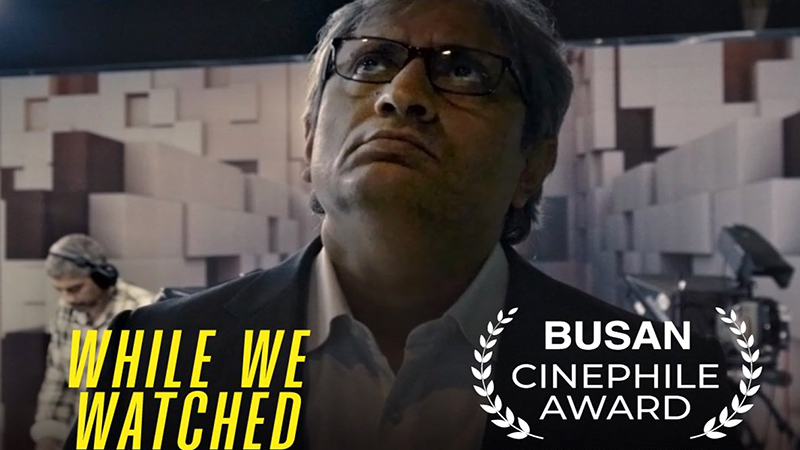
OTT too she believes handles subjects in an engaging manner, “make it believable and human and I loved the documentary on Ravish Kumar – ‘While We Watched’ (Namaskar! Main Ravish Kumar), directed by Vinay Shukla on how tough it is to keep journalistic integrity”.
Another one that blew her away was ‘All That Breathes’, an award-winning documentary about two brothers, Mohammad Saud and Nadeem Shehzad, who rescue and treat injured black kites in Delhi. Directed by Shaunak Sen, it won the Grand Jury Prize at Sundance and Best Documentary at Cannes; it was also nominated for an Oscar.
She watched ‘The Great Shamsuddin Family’, a comedy drama film written-directed by Anusha Rizvi which had terrific performances. “The problem is big films drown their performance, but these small meaningful films are shifting goal posts,” she asserts.
Her parting shot was the best, “one less voice, one less noise” about social media and why she is not on it and never intends to be. “I don’t feel I miss out on anything; I know what I require. Also it saves me from unpleasant news from reaching me. People should be thankful that I am not on it,” she chortles. – Asmita is the Lifestyle Editor of NRI Focus. She is an award winning journalist who has been writing on fashion for the last 32 years
Leave a Reply