
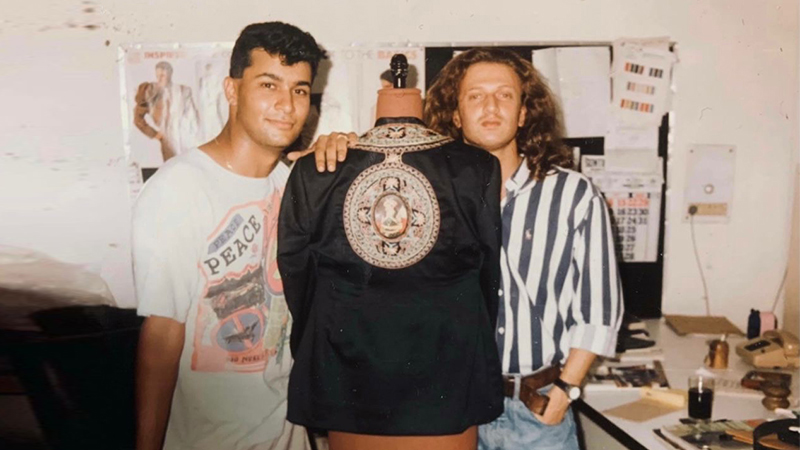





Tarun Tahiliani walked into Ashish N. Soni’s Lajpat Nagar barsati studio in the 1980s, which the latter had rented for Rs. 5,000, monthly, knowing he had struck a goldmine. He invited him to retail at his newly opened store, Ensemble, in 1989.
This was the beginning of the fashion eruption in the capital; everyone started with nothing. Rohit Bal was working out of his exporter brother’s factory in Amrit Nagar, with two rooms in the backyard. India still had no concept of retail. Hauz Khas Village was being developed into a shopping hub by Bina Ramani for foreigners who wanted to experience ‘exotic India’, in her store Once Upon a Time. It was the early 80s.
The monument and picturesque lake at Hauz Khas Village, with India’s first multi-designer store, Signature, run by Bindiya Judge, was where Abu Jani-Sandeep Khosla retailed, by consignment only no outright sales. It was a contrasting world – cow dung outside and Rs. 10,000 silk kurtas inside!
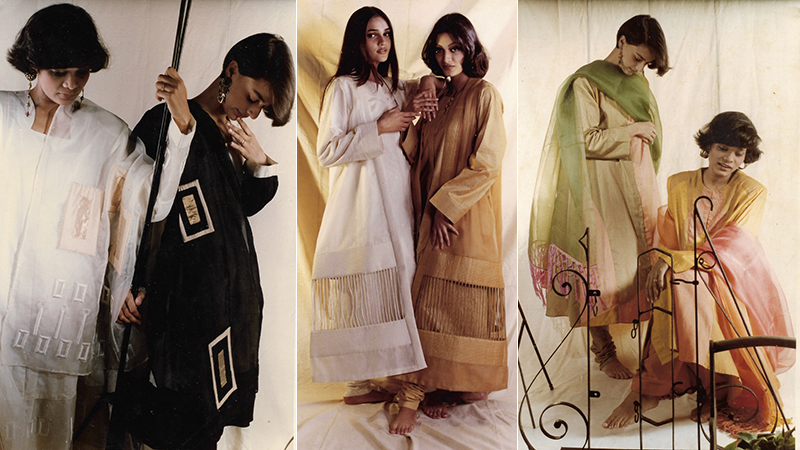
Suneet Varma had a tailoring unit on the first floor, boutique on ground, at HKV. That was the time when his gold breast plates had few takers, as well as his sequinned corsets. “I learnt how to sketch from Suneet; he was a master,” smiles Ashish Soni.
Ajay Gadkil had a nondescript store, Mutiny, in Greater Kailash Part 1; Bal used to retail from there. Luxe malls were non-existent. Men used to get their shirts tailored, women trusted ‘garage aunties’. It was made-to-measure. Never bought off the rack.
Then came Kavita Bhartia’s Ogaan, designed by Revathi Kamath. Sunita Shankar, NIFT first batch graduate, smiles saying, “The landlady in a long ghunghat was so proud of her new tenant. She would call the whole village to see expensive clothes on display. No one had seen swish crowds arrive in a village in swanky cars. Wealthy in diamonds, they were coming to shop with deep pockets, while enjoying a latte in a Bistro, then Basil and Thyme. The place had crippled the Jats, who decided not to educate themselves, but instead live on rent which kept increasing with the village’s popularity.”
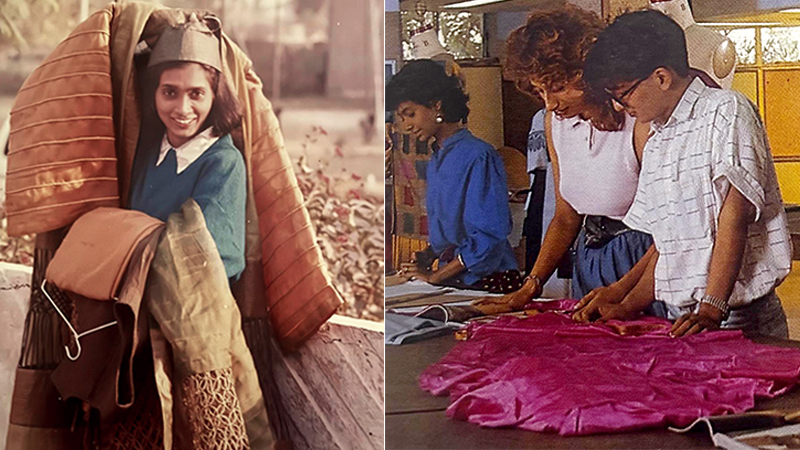
Anu Mafatlal, Omana by Kavita Bhartia, Pallavi Jaikishan, Rohit Bal, Karuna Khaitan’s (Wild Orchid), Ritu Beri, and Rohit Khosla were the only names in fashion in the 80s, when NIFT was launched to help exporters, not promote design.
Italian great Romeo Gigli, early in the 1990s, had his workshop in Karol Bagh. Pierre Cardin had a show in Surajkund, Yves Saint Laurent at Mumbai’s Gateway of India in 1989. “We were not making Western garments, but Rohit Bal was really having fun – he decided to give women boleros that they could team up with saris, trousers; he upgraded kalidar kurtas,” she adds. Varanasi was making zardozi pockets for the Royal British Navy, and NIFT was in first Samrat hotel and then Indira Gandhi Stadium.
“I got artisans from Lakhimpur Kheri village. I had no clue how to deal with them, but trained them to do hand applique, just pure craft a lot different from the social media noise I see today,” she adds.
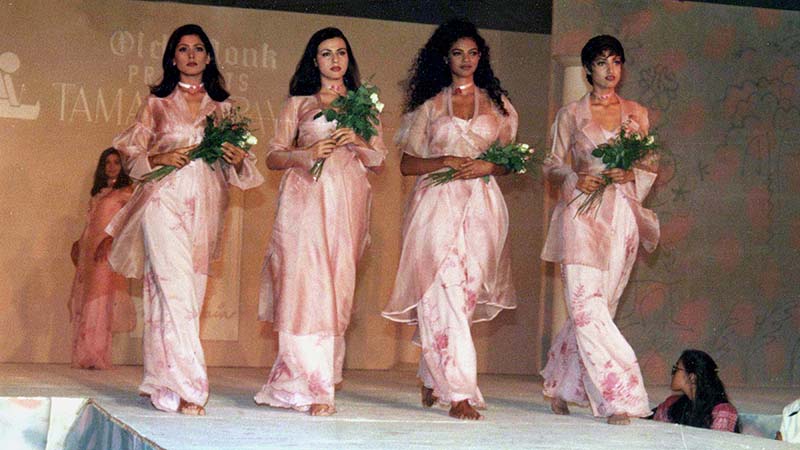
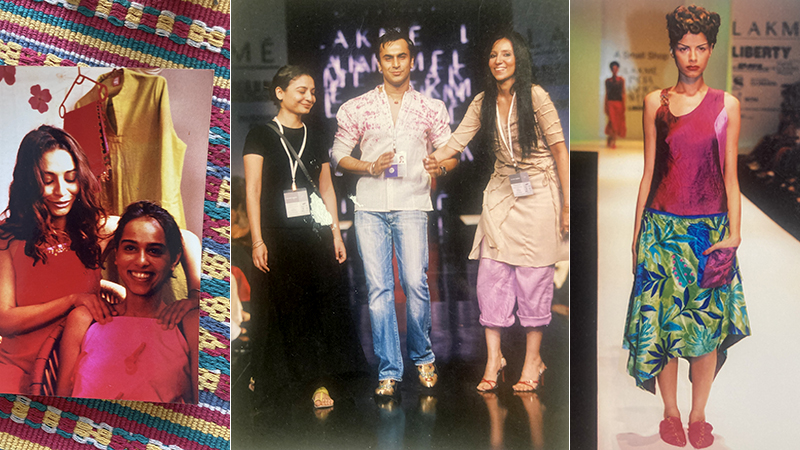
Small Shop, was an all-time favourite for craft lovers as Anshu and Jason decided to announce ‘God is in the small details’.
What Aneeth Arora (Pero) does now, has made a million-dollar business; no one can forget her handmade buttons. Manish Arora was a tour de force, Katy Perry had worn his ‘circus dress’ – he was presenting India in a fresh way that spoke to the West. “I wanted to be slow and simple, special affection for Jamdanis, beadwork, applique placed on edges and between seams of clothes, keeping the Jats who were nice but quite amused,” laughs Anshu Sen Arora. “They looked at us like we were an anomaly,” she chuckles. Japanese buyers wearing Issey Miyake would walk into Arora’s studio, and pick up her reversible jackets. “It was a big high for me,” she says.
“Jat women knew how to embroider, so their skills were used. There were no brands, only sari boutiques. But we were developing our handwriting, our own language, till Selfridges decided to have an India show in year 2000. Till then they thought India was a cheap place for sourcing embroidery and textiles,” admits Arora.
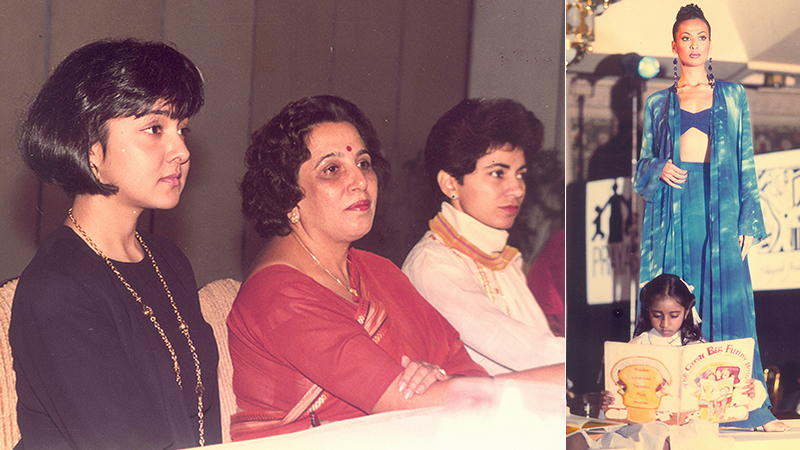
Ffolio, by Sanjay and Yashodhara Shroff, were frontrunners. Ajay Gardkil’s Mutiny was where Rohit Bal’s charcoal sweaters with a Christmas tree were first displayed.
Suneet Varma was a veteran of HKV, he got us all hooked on to his brass plates and corsets, the first to set up a store there, tailors on ground level and studio on first floor; Ashish Soni had many meetings with him, hoping to learn how to sketch. “Men got fabric and gave it to their trusted tailors, while women mostly had ‘garage aunties’ running boutiques to help them,” laughs Soni.
Trips to Shahpur Jat among the Jats smoking hookahs outside herding cattle, sitting on charpoys was a common sight. No one could imagine they were rolling in money. Payal Jain remembers HKV as this eclectic little place which had maverick explorers with only a handful of designers. Bina Ramani’s Signature was a hit. So she got a small little studio there, at the age of 22. “No computers, no internet — life was in the moment,” says Jain.
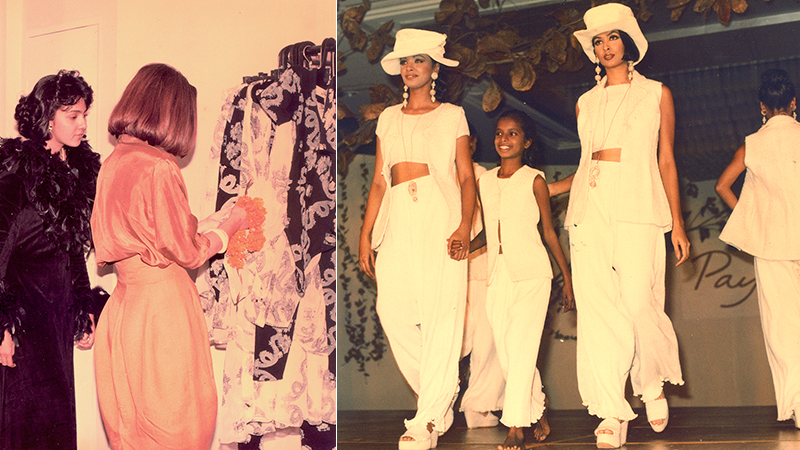
A rickety little staircase from her studio had the lake view. You could shop eclectic furniture from Kathshala, walk amongst cows and buffalos, watching landlords who were rough and tough. Nalini Malhotra’s Marwari store for handpainted saris had a regular clientele.
At the only eatery (Bistro), you ate your sandwich, enjoying the stunning view. “In the day I would walk around, narrow lanes, replete with nose piercers, antiques stores et al, “Relationships were deeper-both with designers and editors,” she grins.
We can’t talk about fashion without mentioning Ritu Beri; her contribution is enormous. “When I first went to Paris, I honestly had no idea what I was walking into. I remember entering a room and suddenly feeling it. Everyone knew the rules, the language, the hierarchy. I didn’t,” she says, talking about meeting the historic French embroiderer Francois Lesage.
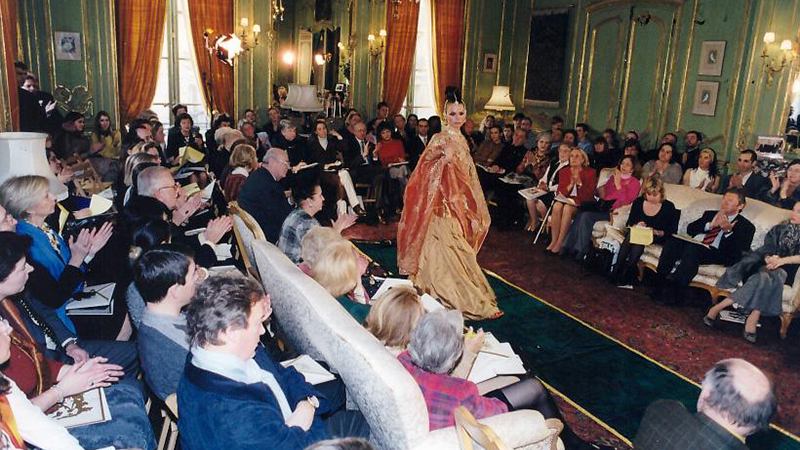
She was the first Indian to showcase at Paris Fashion Week (1998) and head a French fashion house, Jean-Louis Scherrer, winning the Chevalier des Arts et des Lettres (France).
“I realised that what you wear walks into the room before you do. Dressing wasn’t fashion. It was politics. To really get why that moment mattered, you must understand where Indian fashion was back then. There was no fashion industry. None. There were tailors, craftsmen, export houses, but no system, structure, fashion calendar, or ecosystem,” says Beri.
She was part of the first batch of NIFT, and they weren’t trained to enter an industry, but were trained to invent one, figuring things out as they went along, with no templates and no safety net. “Fashion also wasn’t seen as a serious career in India at the time. It was questioned constantly. Why would you do this? What future does it have? In a strange way, that doubt gave her courage.
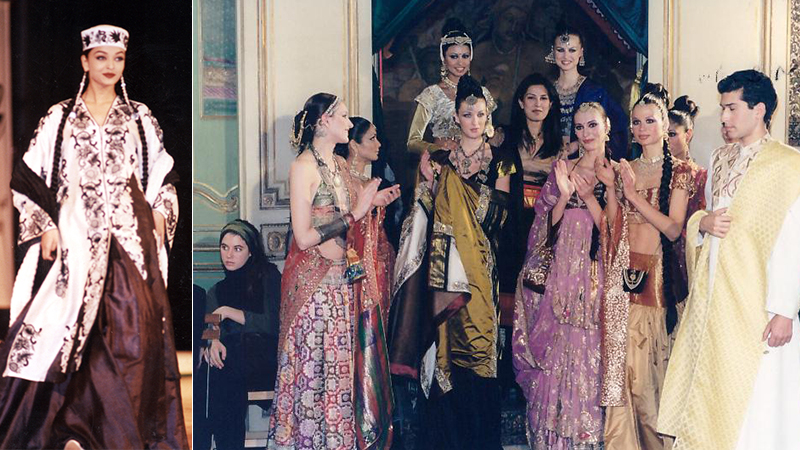
“Then came Paris. Going there as a first-generation Indian designer was intimidating. I wasn’t just representing myself. I was representing a country that had never been positioned in a contemporary global fashion conversation. The politics was quiet, but brutal. You were expected to behave a certain way, dress a certain way, fit into a very neat box. But I didn’t want to blend in. I wanted to belong on my own terms. There’s one moment I remember very clearly. I was wearing something I had designed, and someone asked me where I was from. When I said India, there was a pause. That pause told me everything,” Beri adds.
Paris toughened her up, it clarified her voice – fashion is not soft or decorative, it’s intellectual and strategic, about confidence and conviction.
Hauz Khas Village and Shahpur Jat changed fashion by democratising design. Fashion stepped out of five-star hotels and into lived neighbourhoods. These spaces encouraged discovery and dialogue, allowing young designers to experiment and clients to engage.
Anshu Sen Arora was frank enough to tell me that Dastakar never hired her. But Manish Arora had a studio in Shahpur Jat, where she decided to work with Sasha, a fair-trade organisation.
Arora’s beadwork sat on edges of clothes, or in-between seams. “This amused the Jats. They would buy a Rs. 5,000 dress; their women came to us looking for employment and turned into exquisite embroiderers. We were trying to create a new language of craft, the Indian way, without any Western influences,” she concludes. – Asmita is the Lifestyle Editor of NRI Focus. She is an award winning journalist who has been writing on fashion for the last 32 years
Leave a Reply