
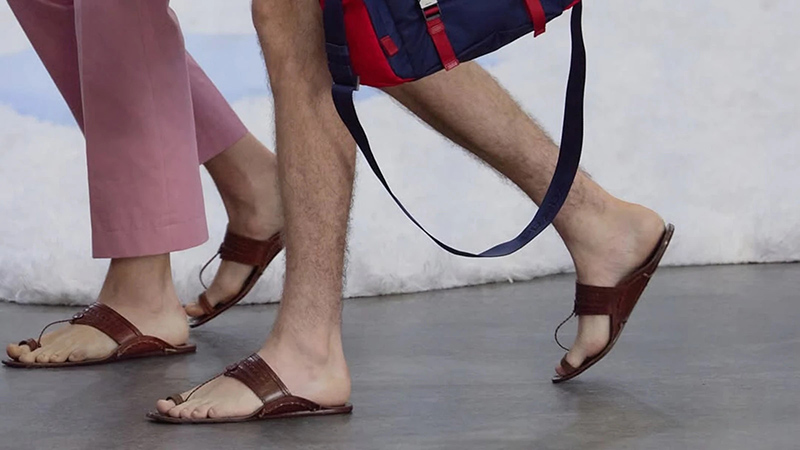





Imagine an $8 sandal retailing in the swish stores of the left bank of France! Roll your tongue and say ‘Rive Gauche’ for a cool $800! What would you call this? Heights of capitalism?
I was a fan of Miuccia Prada, especially her interest in Italy’s cultural heritage – investment in Fondazione Prada art museum, restoring the Abbey of Santa Giustina’s lighting in Padua, and the 15th-century Pinacoteca Provinciale polyptych in Bari, and financing the restoration of Giorgio Vasari’s flood-damaged ‘The Last Supper’ in Florence.
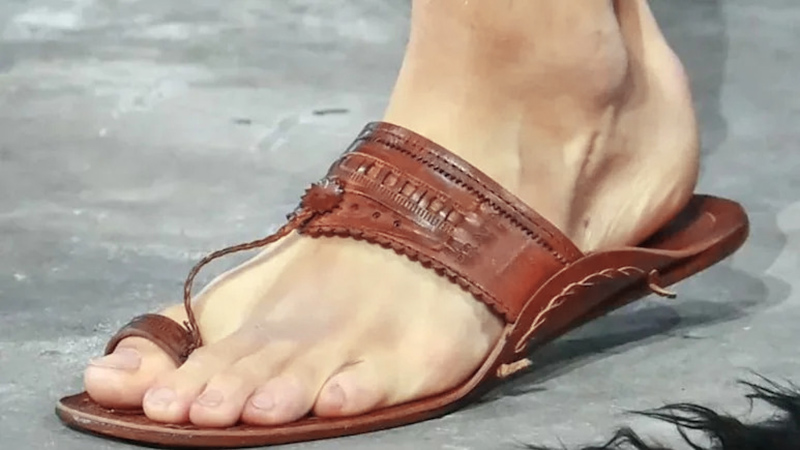
Yet when it came to India, she showcased the ubiquitous Kolhapuri at the Milan fashion week 2025 as ‘leather sandals’. A communist who turns into a capitalist (she recently acquired the fledgling Versace)? Interesting, no? What money and power can do!
After a backlash, Kolhapuri artisans, in a dignified response presented Prada with a book, ‘The Kolhapuri’ by Kalapuri, to document the craft’s heritage. It is written in Marathi (English version on side) explaining to probably ‘ignorant goras’ the 1,000-year-old history of Kolhapur. How the chappal has been handmade since the 12th century, naturally dyed, perfect for hot weather.

I don’t know who will wear open toes in freezing Europe and incur frost bites? After being trolled for taking credit of artisans, in February 2026, the Prada team visited India and announced a limited-edition collection, in collaboration with Kolhapur. The Kolhapuri book was submitted in Germany for patent filing.
There are many villages that make this unique chappal, which is called by different names such as Kapashi, Pukari, Paytaan, and Bakkalnali. It also won patronage by Chhatrapati Shahu Maharaj, who saw it durable and breathable! The beauty of the product is that it woudn’t break, would withstand monsoon mud and the sharp, rocky terrain, making it a winner of the Geographical Indication (GI) tag in 2019.
Young designer Bhavya Goenka, founder Iro Iro, believes the problem is of equality, missing socio-cultural angle and from a feminist point of view it is also about who is making the sandal, and what their lives are like. Not that sandals are doing well so they invest in it, more. “Saying ‘oops we made a mistake; we will rectify it’ is not enough. No one talks about how Indian artisans are viewed as labourers who need training, unlike Japanese or Italian artisans. ‘We will train and upskill them’ – no, that’s not right. It’s a very hierarchical system and colonial narrative. It should instead be: let’s co-create,” she says.
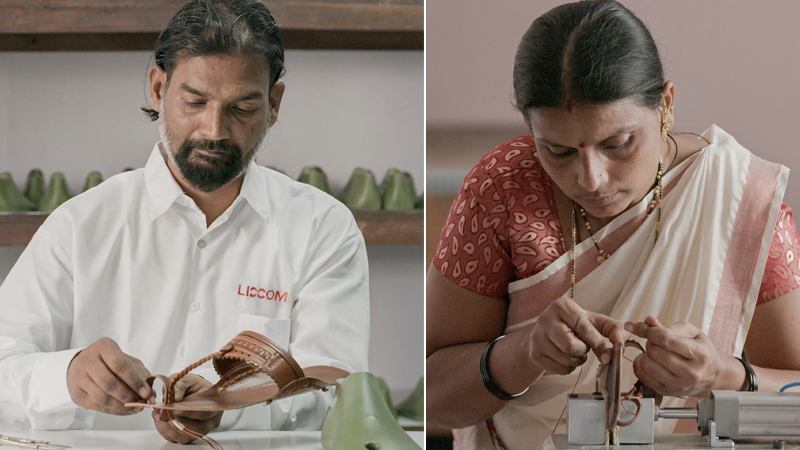
Kolhapur, on the banks of the Panchganga, is known for its spicy misal pav. It must have been an eye-opener for Prada that to avoid further legal problems, they announced a three-year training programme for artisans from eight districts associated with Kolhapuri sandal-making. The brand will train 180 artisans in six-month modules through two Indian design institutes, and will continue training at the Prada Group Academy, Italy.
Kochi-based Sreejith Jeevan of the label, Rouka, has an interesting take on the controversy. “Because Prada is retailing, it received global recognition; otherwise it is just a Kolhapuri. When made by the same traditional artisans, why is it being sold for $800 but priced Rs.500 in India? If there is no other design input other than them just retailing, it doesn’t make it luxe.” To take something that is so ordinary, normal in India, and to rebrand it as theirs, sell it at a premium price, to people in our own country is what happened with colonization. A cloth was taken and sold back to us, in different packages and branding by the British.
Last year, Jeevan made a lot of fuss on Instagram when a brand with a larger Insta following copied his design. “When somebody with a larger following copies, it becomes theirs; likewise it is known as a Prada sandal, and not a Kolhapuri. But do profits come back to the artisan?
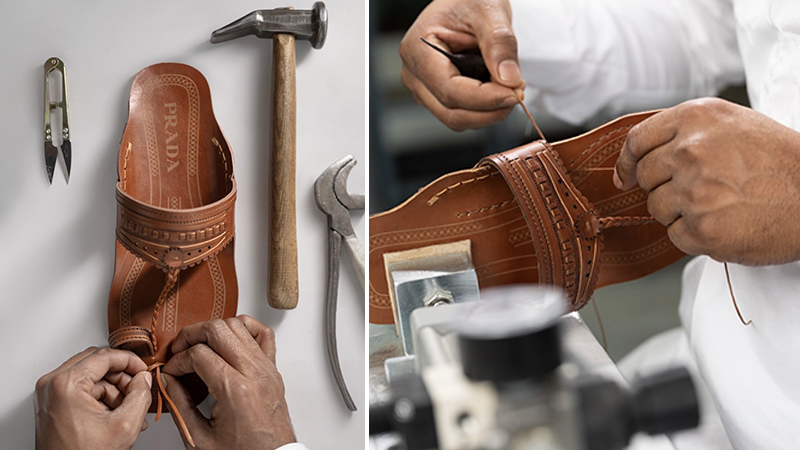
The fact is what is being retailed is not designed by Prada; they did not indulge earlier in any design development or improvisation, it is just a copy, without any context before the backlash.
Crafts lover and Prama founder Pratima Pandey believes that as an Indian designer deeply immersed in handloom and artisanal traditions, this moment is larger than one product or one luxury house. It brings us to an important question — who receives recognition when craft travels? India has always been a land of extraordinary making. Our weaves, leatherwork, embroideries, textiles have lived through generations not as trends, but as inheritances carried by skilled hands. Yet very often, these traditions are celebrated globally only after they are reinterpreted elsewhere.
“I think what craft asks from the modern luxury world is not merely inspiration, but acknowledgement. Not just adaptation, but authorship. Not just commerce, but connection to communities that have preserved these forms for centuries. For me, true luxury begins at source. It begins with naming artisan, understanding geography, respecting the memory, and recognising that these objects are not anonymous designs — they are cultural legacies. As designers from India, we do not need to rediscover craft. We have grown within it. And I believe this is the time for Indian voices, Indian makers, and Indian design houses to speak not from sentiment, but from authority. Because craft deserves to be admired, yes — but above all, it deserves to be credited,” she adds.
Designer Sunita Shanker who has been working with craftsmen for over 30 years is delighted at the stand that we took when Prada said it was inspired by Kolhapuri. She believes collective awareness is required by people who are making these policies, appropriating Indian crafts; somewhere we need to make artisans aware. “The Chamber of Commerce Maharashtra caught on to it and safeguarded it. Prada is now training artisans; it is a wakeup call for any brand internationally, that it is not entitled to appropriate any craft that has been there for centuries. GI should be pan-India. These are big international companies with huge margins of profit. It should be part of their global social responsibility towards craft community,” she adds. The backlash will ensure it is not repeated; the authorship lies with artisans, they need to be befitted.
Designer Siddharth Bansal, is looking at it as a recognition on a global platform, as craft – for us – is not nostalgia, it is the future for luxury and innovation. Every craft in India is identified for its region – it is an identity of that area. India holds an extraordinary reservoir of crafts; we need to empower artisans with visibility. “If nurtured correctly, Indian craft can lead to the making of the strongest economies of the world. India is a library of skills, which the world is reading. We live in conscious times – things are changing for the fashion fraternity. We must preserve these crafts; we should not change the skill set of artisans, it is our responsibility to enhance their aesthetic and not their skill. Give them fair dues,” he admits.
Designer Gautam Gupta, says that without credit it is just copying – good they are using our heritage, “we don’t want reconciliation, we need real introspection before you begin the design process”.
Moments like this put Indian crafts into global spotlight, a luxe house drawing from our traditional designs reinforces the strength of Indian heritage. “The price gap needs more fairness; Prada has done remedial steps but it is not enough. We need more respect for artisans; this is an eye opener for us – for future opportunities, and how we can tap it better,” says Nagpur-based designer Shruti Sancheti. – Asmita is the Lifestyle Editor of NRI Focus. She is an award winning journalist who has been writing on fashion for the last 32 years
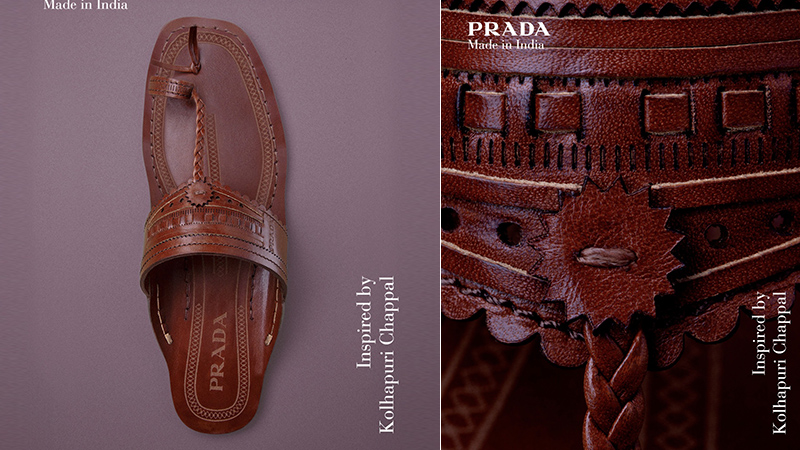
Blending culture and luxe
Prada Made in India x Inspired by Kolhapuri Chappals – crafted by LIDCOM and LIDKAR artisans
Prada’s limited-edition collection of sandals combines traditional techniques with the brand’s contemporary design and premium materials to create a unique dialogue between Indian heritage and modern luxury expression. The collection has been manufactured in India by skilled artisans from the regions of Maharashtra and Karnataka. As a part of the project, the Group is pleased to announce the foundation of a training program fully funded by Prada, including through the proceeds of the sale of the limited-edition sandal collection, dedicated to artisans from the eight districts in India where Kolhapuri Chappals are traditionally manufactured. Developed in collaboration with LIDCOM, LIDKAR, and leading design institutes – the National Institute of Fashion Technology (NIFT) and the Karnataka Institute of Leather & Fashion Technology (KILT) – the program is designed to strengthen design and technical skills, enabling artisans to create products that meet evolving market needs, while ensuring the continued relevance of this traditional craft.This initiative reflects the Group’s long-standing commitment to reinvest in education and culture.
Leave a Reply