





For NRIs travelling back to their homeland for the holidays, time is often limited. Amid visits to extended family and friends and several prior commitments, attending an arts festival may not always be a priority.
However, Kochi’s very own Muziris Biennale is a whole other story.
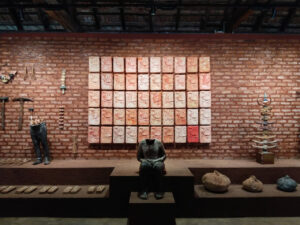
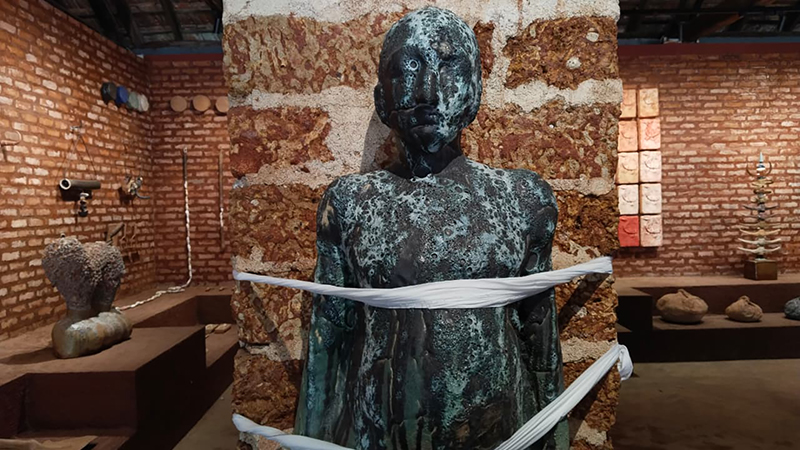
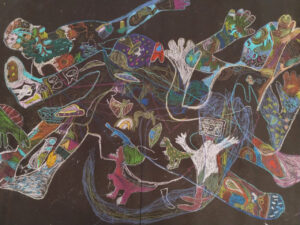
The sixth edition of the Kochi‑Muziris Biennale (KMB), South Asia’s largest contemporary art festival, opened to the public on December 12, 2025, and will run through March 31, 2026. Titled ‘For the Time Being’, this edition is curated by Indian artist Nikhil Chopra in collaboration with HH Art Spaces and features 66 projects by artists and collectives from more than 25 countries at 22 venues across Fort Kochi, Mattancherry, Ernakulam and Willingdon Island.
The Biennale transforms Kochi into a city‑wide art experience, with exhibitions, talks, performances, workshops and film screenings at a mix of heritage sites and contemporary spaces. Principal locations include Aspinwall House and Pepper House in Fort Kochi; Anand Warehouse, SMS Hall, 111 Marcus and Café, and Space at Indian Chamber of Commerce in Mattancherry; and the new Island Warehouse on Willingdon Island, which is accessible by Water Metro or local ferry.

For NRIs, the Biennale offers more than just a chance to see art. It provides a direct encounter with India’s cultural heritage and contemporary creative practice in the setting where they intersect. The venues themselves are part of Kochi’s history, from colonial warehouses by the sea to renovated galleries in the heart of the city, giving returning Indians a deeper sense of place and memory that complements the artworks. The Biennale’s schedule of talks and performances allows visitors to engage with artists and curators directly, turning a visit into a learning opportunity rather than a passive viewing.
The ‘Students Biennale’, which opened on December 13, runs alongside the main exhibitions and showcases work by students from more than 150 art institutions from across India. Organised across several spaces such as VKL Warehouse, Arthshila Kochi and BMS Warehouse in Mattancherry, it offers emerging voices a professional platform and gives visitors an early look at the next generation of Indian artists. For NRIs with an interest in education, design, media or arts practice, this programme can provide insights into contemporary Indian art training that might not be visible outside the country.

Other collateral projects include ‘Art by Children’, which features creative work by school children from across Kerala, ‘Invitations’, which brings in cultural initiatives from outside Kerala, and ‘Edam’, a curated exhibition along Bazaar Road in Mattancherry.
The spread of venues across different parts of Kochi encourages visitors to move through historic neighbourhoods, taste local food, visit spice markets and explore local historical and cultural sights, turning the Biennale into a broader travel experience. Visiting the Biennale also fits well with travel plans during Kerala’s peak tourism season, when temperatures are pleasant. Cochin International Airport (COK) connects to major global hubs, and once in the city, visitors can easily reach venues by uber taxis, bus, auto‑rickshaw, Water Metro or ferry.
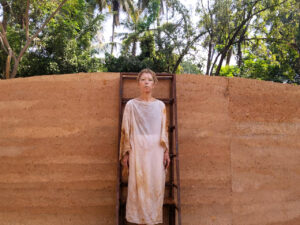
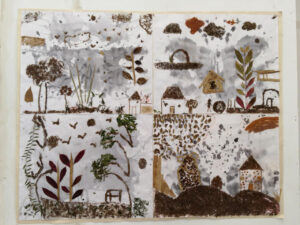
Among the sections worth spending time with this year are the Students’ Biennale and Art by Children, which offer a noticeably different mood from the main exhibition. Spread across multiple venues, these sections reflect how younger participants are thinking and responding to the world, with ideas and approaches that differ in tone, scale and depth from the rest of the Biennale. Seen alongside the main exhibition, they provide a contrast that helps visitors better understand the range of voices shaping the festival.
For visitors with limited time, Aspinwall House in Fort Kochi remains one of the most essential Biennale locations, bringing together several artist projects under one roof and offering a more concentrated experience than many of the dispersed sites.
Tickets are required for selected exhibitions. A one‑day ticket costs ₹200 for adults, ₹100 for students and seniors, and entry is free for children up to 10 years old. Weekly passes are priced at ₹1,000 for adults and ₹500 for students and seniors.
Tickets can be purchased online via the Biennale’s official website or on site at venues including Aspinwall House. Exhibitions generally run from 10 a.m. to 6 p.m. daily, and visitors are encouraged to plan multiple days to fully experience the breadth of the festival. – editor@nrifocus.com
Leave a Reply