
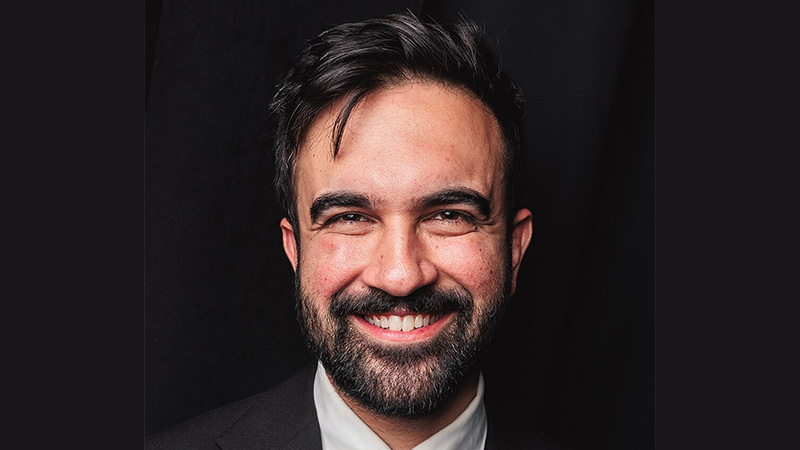





The first time I sat up and took note of Zohran Mamdani was when, sometime in July last year, he broke into Bengali while having a friendly banter — and tucking into mishti doi (sweetened curd that typically stands in as dessert after a Bengali meal) — with Shahana Hanif, the Bangladeshi-origin New York City Council member. It didn’t matter to me if Shahana was of Bangladeshi origin or Indian origin. What mattered was that a Ugandan-born American with lineage tracing back to Gujarat was engaging with her in non-fluent yet curated Bengali — the language from the part of the world I was born and raised in.
That’s probably the (new) Mayor of NYC’s most potent calling card. He hits home. So whether you are a true-blue New Yorker and a cosmopolitanist, and he tells you “This city belongs to you” and “We will replace the frigidity of rugged individualism with the warmth of collectivism”, or whether you are a displaced Bengali living in Dubai who occasionally seeks out mishti doi, Mamdani manages to speak to you in a way very few politicians have ever done.
In 2026, many American political pundits expect Mamdani to be the face of the Democratic Party — because he’s brought in just so much charisma and chutzpah and (perceived) good intent; for liberals, he’s been the sweeping antidote to US President Donald Trump; for conservatives, he poses a countervail that no amount of nervous laughter and trolling can defuse.
In the media, there is a lot of chatter on his political prospects, his “authentic” outreaches to constituents, his “strategic” gamesmanship. But, interestingly, the bulk of Indians and a substantial chunk of Americans of Indian origin have been trying to brush the Mamdani effect under the carpet. Which is a bit strange considering how eager they were to embrace Kamala Harris as one of their own when she was the US Vice President and for that short streak of time when she was in the running for the presidency. Even after Mamdani described New York as a city “built by immigrants, powered by immigrants, and, as of tonight, led by an immigrant” on being appointed Mayor. Not to forget that his mother, much-loved filmmaker Mira Nair who has a strong “popular” connection to India, also remains in the mix very visibly.
People of Indian origin who live in the US, and who (you’d assume) should have been dancing on the streets as his career trajectory looks onwards and upwards are nervous saying anything “positive” about Mamdani (other than gush about his cutesy quotient) since it’ll be construed as being politically-incorrect. If you are on his side, you automatically become part of the non-MAGA narrative, and, therefore, anti-nationalist.
And because Mamdani has made no bones of his disdain for communalism being stoked in India, made some controversial claims on Kashmir, and didn’t have too many kind words to say about Prime Minister Narendra Modi, the denizens of “new” India are pissed off at him. Even sections of India’s left-leaning liberals are being cautious: the radical democratic socialism that Mamdani advocates is at odds with their idea of more watered-down, “convenient” version.
Ultimately, it probably all boils down to a new phrase that has been coined, and doing the rounds for the past few months in Indian circuits: Mamdani Envy. How is it that a man with Indian roots, who quoted Nehru in his victory speech and played Bollywood music at the end of it, become an icon in the western world in the most aesthetic way possible? How can a 34-year-old be so confident, self-composed, and empathetic all at once? How does he manage to create a movement without whipping up delusions? And how does he get frazzled immigrants, a disillusioned middle class, and disinterested youth back in the game — and on to the political bandwagon?
These are uncomfortable questions in today’s world that have no comfortable answers — other than deflection.
In many ways, Mamdani Envy is the story of one man’s unapologetic rise, without asking for permission. But this story, like Mamdani himself, hits a nerve too close to home. In the gap between a soaring appeal and most Indians’ simmering discomfort lies the unresolved story of a global India, searching for its own reflection. – Sushmita Bose is consulting editor, NRIFocus.com
Leave a Reply