






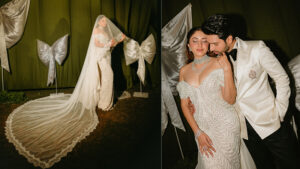
Jenniffer Lopez was paid $2 million to perform at an Indian billionaire’s wedding, she wore Manish Malhotra, crystal bodice, embellished cutwork gown, Maharani Necklace, featured more than 168 carats of emeralds and took over 1,800 hours to craft. The average budget of an Indian household is ₹39.5 lakhs, of course not Rs.100 crores-getting SRK and Hrithik Roshan, and Madhuri Dixit to perform, that’s an altogether different ball game. And when you can spend millions to get international stars, clothes are nothing in comparison.
Twenty years ago, you came with your entire family to choose a wedding outfit. Now, for the bride-to-be to conduct her research, she has an Instagram page open, with the exact look she wants for her wedding. That’s not all. There are tabs waiting to be shown – Pinterest for jewellery, hair, and makeup inspiration on the super smartphone. If you did not already know October to February are the peak months for Indian weddings, 4.6 million are to take place in 2025-2026. Imagine the business it generates for Indian designers; this year’s projection ₹6.5 lakh crore, out of this apparel takes a big pie.
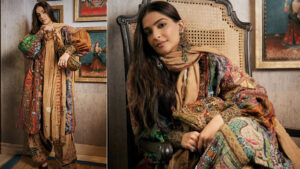
Interestingly, it is not the bride’s lehengas which gets the moolah but the extended family, as well as the attendees. Most designers at least seven of them; they dress almost 200 to 300 people each season, preparations begin in March for retail. Shoppers start scouting by July-August. Most importantly 60-80% of their revenue is heavily dependent on the wedding season.
“Heavy always works – embroidery, shine, layering; no one repeats outfits; you do the math of ensembles required — four functions minimum, at least 50 guests, and family even if it is an intimate one,” says couturier Seema Gujral. “There are budgets in place, but if your daughter likes a lehenga, you will not think twice as it is her dream wedding, add a lakh or two more for that one special day to be remembered. Forget NRIs, even Turkish weddings have Indian lehengas and sherwanis. We always give ‘extra’,” she laughs, adding, white girls have boring white gowns, “they love our vivacity. I tell my sales girls, we are in the business of making brides happy, do what they want, bend backwards,” she adds.
Sometimes the bride comes alone, sometimes the entire entourage, including grandparents. Fathers are wearing bundis, sherwanis, embroidered sets, and we also have mixed weddings – Indian bride, American groom, there is no set template of who might walk in through that door. “There is no difference between a bride from Raipur or Delhi, both come with R and D,” explains Gujral.
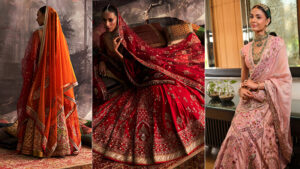
The age for getting hitched is either before 25 or after 35 years; they are aware of what they like, they may not be able to afford a Rs. 15 lakh Sabyasachi lehenga, but can go for Seema’s Rs. 4 lakh, there is something for every price range. The most interesting customer is from tier 2 and 3 cities, “they are in awe of designers. Coming to Delhi and buying is like a vacation for them – it’s a whole process of making memories – eat, shop, take pics for Insta,” she adds.
If Alia Bhatt wore white, they will do their own version of it, or of Deepika’s red to Anoushka’s pastel. “I had a mom-in-law sending me pics of what she wore from us, including newspaper clippings of her dress being featured. Forget brides, moms are so fit, they want to look like a million bucks,” says Dolly J, who recently dressed Ranveer Singh’s cousin sister Saumya Hingorani. From knowing their body type, to palette, to what their friends wore, what is available where, what price, how their “joda” needs to be different is talked about at length before the final decision.
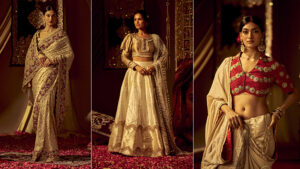
Hyderabad-based designer Jayanti Reddy, may be known for her Kanjeevarams and Banarasis, admits it takes three months at least for bespoke tailoring, to get the colour right, even a little difference in the final effect, it can affect the bride’s mood. She had 800 orders this year, some for her kaftans (almost 15,000 pieces), the most extraordinary piece is a fully embroidered lehenga for Rs. 9 lakh. “Tier 2 and 3 cities, I feel are more experimental with shapes, I would say, almost 50% of my revenue comes from just this season,” says Reddy. She customises heirlooms, many brides wear their grandma or mom’s wedding outfit; she adds a border to a blouse, but the market is not just of lehengas, but also cocktail, milnee, sangeet and mehndi.
Harpreet Narula, a textile revivalist, has an impressive archive spanning over 25 years, with 2 lakh pieces collected from all over the world. “When I got married 1,500 people were invited,” says Harpreet, “now you have 100, close ones. Brides who come to us prefer a traditional approach, old costumes that fit a palace wedding, not garish crystals, but textile lovers,” he adds. If you look closely, he recreates museum looks, without modernising them. He believes “local is more global”, he never was on the trend treadmill.
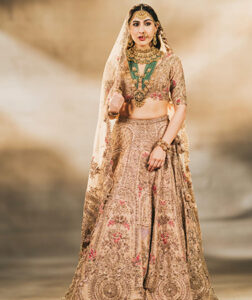
In a market that satiates money and egos, “it is all about flex”, he prefers less numbers, prioritises unique pieces, 80% of the business is from couture. NRIs plan way ahead, almost 9 months; Canada, US, UK, Dubai, Singapore, New Zealand are big markets. “Big polkis, chunks of diamonds, hideous — insta pressure is real, making each one look like a clone of each other, young designers succumb to increase in sales, somewhere lose their signature,” he adds.
Indians are obsessed with shine, it is the ugly reality of fashion, connoisseurs love the gharchola, Bandhej, doshalas, specially how the Narulas style it. Interesting references from cinema, old classics. We are in rich India, with lots more disposable income, brides have money to make their own choices, but concepts of “Vaari” for men and “dahej” for women are outdated, where both were given 30 pieces, collected over 30 years by the family. “Luxury brands have zero value for money, so sad Gen Z wants to buy, ready to spend crores on a bag,” says Narula, who won the TOIFA and Filmfare awards for Heeramandi.
Nikhil Mehra of Shantnu and Nikhil, leaders in menswear, says men are not as well planned as women; they are last-minute buyers. Factories are on an overdrive, August to September pumping manpower to get ready for the season. “It all depends on the ‘saaya’ or auspicious wedding dates, our sales increase by 15 per cent each year, acquiring new customers, marriages amount to 60 per cent of our revenue,” says Mehra.
We are a festivity obsessed market, celebratory in its DNA, with Insta the whole landscape has changed, customers from Indore, Orissa to Raipur, Meerut can see what is new in a swipe. Designer Maheka Mirpuri, who has been in the bridal business for over 25 years, says smaller towns like adventure, with new money, large exposure through social media, more Swarovskis are less now, she laughs. Almost 50% of her revenue comes from weddings. “I had a client from Meerut who told me, ‘We love your clothes, but where shall we wear it, we don’t have many options to party in a small city, we get judged. It’s not like Delhi’,” says Mirpuri, adding, “designer clothing makes them a hit the ‘it’ circuit, adds “status”, they buy from her despite strict no exchange or refund policy.
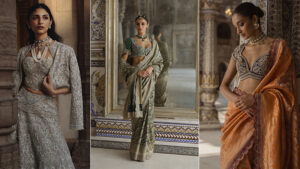
What’s new? Semi-precious stones on necklines, “we have silver plated blouses, emerald and rubies, garnets on blouses, so you don’t need any jewellery anymore,” she chuckles.
Couturier Anju Modi known for films like Bajirao Mastani and Padmaavat, unbridled grandeur, believes wedding wear is a necessity unlike RTW, where if you don’t like H & M there is Zara. You can’t buy couture online, it’s more lucrative to dress the entire family, who come with screenshots of the looks they want. “Most of the preliminary selection is done on the phone, the internet opens an ocean of possibilities, but the ones who are looking for glam go to Falguni and Shane Peacock. I’m a traditionalist, offering heritage,” says Modi. A Tarun Tahiliani may not bring his price down from Rs. 16 lakhs neither will a Sabyasachi, but smaller designers “adjust”. She starts from Rs. 5 lakh onwards for bridal lehengas. At Shahpurjat you can get some for even Rs. 1 lakh, so they compare features, price, and want value for money.
In the end what matters to each bride is that on Insta she should shine. Designers are leaving no stone unturned to achieve this, literally and metaphorically! – Asmita is the Lifestyle Editor of NRI Focus. She is an award winning journalist who has been writing on fashion for the last 32 years
Leave a Reply